|
|
Herb Information
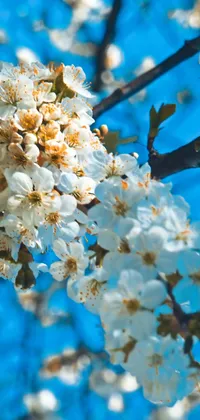
Hawthorn (photo)
Botanical: Crataegus oxyacantha (LINN.)
Family: N.O. Rosaceae
Synonyms---May.
Mayblossom. Quick. Thorn. Whitethorn. Haw. Hazels. Gazels. Halves. Hagthorn.
Ladies' Meat. Bread and Cheese Tree.
(French) L'épine noble
(German) Hagedorn
Part Used---Dried haws or fruits.
Habitat---Europe, North Africa, Western Asia.
---Description---The Hawthorn is the badge of the Ogilvies and gets one of its commonest popular names
from blooming in May. Many country villagers believe that Hawthorn flowers still bear the smell of the Great


Plague of London. The tree was formerly regarded as sacred, probably from a tradition that it furnished the

Crown of Thorns. The device of a Hawthorn bush was chosen by Henry VII because a small crown from the
helmet of Richard III was discovered hanging on it after the battle of Bosworth, hence the saying, 'Cleve to
thy Crown though it hangs on a bush.' The Hawthorn is called Crataegus Oxyacantha from the Greek
kratos,
meaning hardness (of the wood), oxcus (sharp), and akantha (a thorn). The German name of
Hagedorn,
meaning Hedgethorn, shows that from a very early period the Germans divided their land into plots by
hedges; the word haw is also an old word for hedge. The name Whitethorn arises from the whiteness of its
bark and Quickset from its growing as a quick or living hedge, in contrast to a paling of dead wood.
This familiar tree will attain a height of 30 feet and lives to a great age. It possesses a single seed-vessel to each
blossom producing a separate fruit, which when ripe is a brilliant red and this is in miniature a stony apple. In some
districts these mealy red fruits are called Pixie Pears, Cuckoo's Beads and Chucky Cheese. The flowers are mostly
fertilized by carrion insects, the suggestion of decomposition in the perfume attracts those insects that lay their eggs
and hatch out their larvae in decaying animal matter.
---Constituents---In common with other members of the Prunus and Pyrus groups of theorder Rosaceae, the
Hawthorn contains Amyddalin. The bark contains the alkaloid Crataegin, isolated in greyish-white crystals, bitter in
taste, soluble in water, with difficulty in alcohol and not at all in ether.
---Medicinal Action and Uses---Cardiac, diuretic, astringent, tonic. Mainly used as a cardiac tonic in organic and
functional heart troubles. Both flowers and berries are astringent and useful in decoction to cure sore throats. A
useful diuretic in dropsy and kidney troubles.
---Preparation and dosage---Fluid Extract of Berries, 10 to 15 drops.
The leaves have been used as an adulterant for tea. An excellent liquer is made from Hawthorn berries with brandy.
Formerly the timber, when of sufficient size, was used for making small articles. The root-wood was also used for
making boxes and combs; the wood has a fine grain and takes a beautiful polish. It makes excellent fuel, making the
hottest wood-fire known and used to be considered more desirable than Oak for oven-heating. Charcoal made from it
has been said to melt pig-iron without the aid of a blast.
The stock is employed not only for grafting varieties of its own species, but also for several of the garden fruits closely
allied to it, such as the medlar and pear.
---Other Species---
C. Aronia is a bushy species giving larger fleshy fruit than C. Oxyacantha. It is indigenous to Southern Europe and
Western Asia and is common about Jerusalem and the Mount of Olives, where its fruit is used for preserves.
C. odoratissima is very agreeable also as a fruit.
C. Azarole. Its fruit in the same way is highly esteemed in Southern Europe.
Motherwort
Botanical: Leonurus cardiaca (LINN.)
Family: N.O. Labiatae
---Part Used---Herb.
Motherwort, the only British representative of the genus Leonurus, is a native of many parts of Europe, on banks
and under hedges, in a gravelly or calcareous soil. It is often found in country gardens, where it was formerly grown
for medicinal purposes, but it is rare to find it truly wild in England, and by
some authorities it is not considered
indigenous, but merely a garden escape.
---Description---It is distinguished from all other British labiates by the leaves, which are deeply and palmately cut
into five lobes, or three-pointed segments, and by the prickly calyx-teeth of its flowers. When not in flower, it
resembles Mugwort in habit.
From the perennial root-stock rise the square, stout stems, 2 to 3 feet high, erect and branched, principally below, the
angles prominent. The leaves are very closely set, the radical ones on slender, long petioles, ovate, lobed and
toothed, those on the stem, 2 to 3 inches long, petioled, wedge-shaped; the lower roundish, palmately five-lobed, the
lobes trifid at the apex, the upper three-fid, coarsely serrate, reticulately veined, the veinlets prominent beneath,
with slender, curved hairs. The uppermost leaves and bracts are very narrow and entire, or only with a tooth on each
side, and bear in their axils numerous whorls of pinkish, or nearly white, sessile flowers, six to fifteen in a whorl. The
corollas, though whitish on the outside, are stained with paler or darker purple within. They have rather short tubes
and nearly flat upper lips, very hairy above, with long, woolly hairs. The two front stamens are the longest and the
anthers are sprinkled with hard, shining dots.
The plant blossoms in August. It has rather a pungent odour and a very bitter taste. It is a dull green, the leaves paler
below, pubescent, especially on the angles of the stem and the underside of the leaves, the hairs varying much in
length and abundance.
The name of the genus, Leonurus, in Greek signifies a Lion's tail, from some fancied resemblance in the plant.
---Cultivation---When once planted in a garden, Motherwort will soon increase if
the seeds are permitted to scatter.
It is perfectly hardy and needs no special soil, and the roots will continue for many years.
Seedlings should be planted about a foot apart.
---Part Used---The whole herb, dried, cut in August. The drying may be carried out in any of the ways described for
Scullcap.
---Medicinal Action and Uses---Diaphoretic, antispasmodic, tonic, nervine, emmenagogue. Motherwort is
especially valuable in female weakness and disorders (hence the name), allaying nervous irritability and inducing
quiet and passivity of the whole nervous system.
As a tonic, it acts without producing febrile excitement, and in fevers, attended with nervousness and delirium, it is
extremely useful.
Old writers tell us that there is no better herb for strengthening and gladdening the heart, and that it is good against
hysterical complaints, and especially for palpitations of the heart when they arise from hysteric causes, and that when
made into a syrup, it will allay inward tremors, faintings, etc. There is no doubt it has proved the truth of their claims
in its use as a simple tonic, not only in heart disease, neuralgia and other affections of the heart, but also in spinal
disease and in recovery from fevers where other tonics are inadmissable.
In Macer's Herbal we find 'Motherwort' mentioned as one of the herbs which were considered all-powerful against
'wykked sperytis.'
The best way of giving it is in the form of a conserve, made from the young tops, says one writer. It may be given in
decoctions, or a strong infusion, but is very unpleasant to take that way. The infusion is made from 1 OZ. of herb to a
pint of boiling water, taken in wineglassful doses.
---Preparations and Dosages---Powdered herb, 1/2 to 1 drachm. Fluid extract, 1/2 to 1 drachm. Solid extract, 5 to
15 grains.
Culpepper wrote of Motherwort: 'Venus owns this herb and it is under Leo. There is no better herb to drive melancholy vapours from the heart,
to strengthen it and make the mind cheerful, blithe and merry. May be kept in a syrup, or conserve, therefore
the Latins call it cardiaca.... It cleanse the the chest of cold phlegm, oppressing it and killeth worms in the belly.
It is of good use to warm and dry up the cold humours, to digest and disperse them that are settled in the veins,
joints and sinews of the body and to help cramps and convulsions.'
And Gerard says: 'Divers commend it against infirmities of the heart. Moreover the same is commended for green wounds; it is
also a remedy against certain diseases in cattell, as the cough and murreine, and for that cause divers
husbandmen oftentimes much desire it.'
source: Common Name Index A MODERN HERBAL